Professional Equipment Manufacturer


 Esperanto
 Shqiptare
 Euskara
 Zulu
 Latinus
 Cymraeg
 தமிழ்
 Slovak
 Slovak
 Afrikaans


2026 Comprehensive Guide to Automatic PCB Rework Station: Selection, Operation & ROI
2026-10-24
📋 Article Overview
This guide breaks down core functionality, operational workflows, selection criteria, and ROI calculations for Automatic PCB rework stations, drawing on 12+ years of experience as a BGA rework station and X-ray machine supplier at www.xraybgamachine.com, plus 2026 industry performance data from global electronics manufacturing deployments.
What Is an Automatic PCB Rework Station and How It Works in 2026
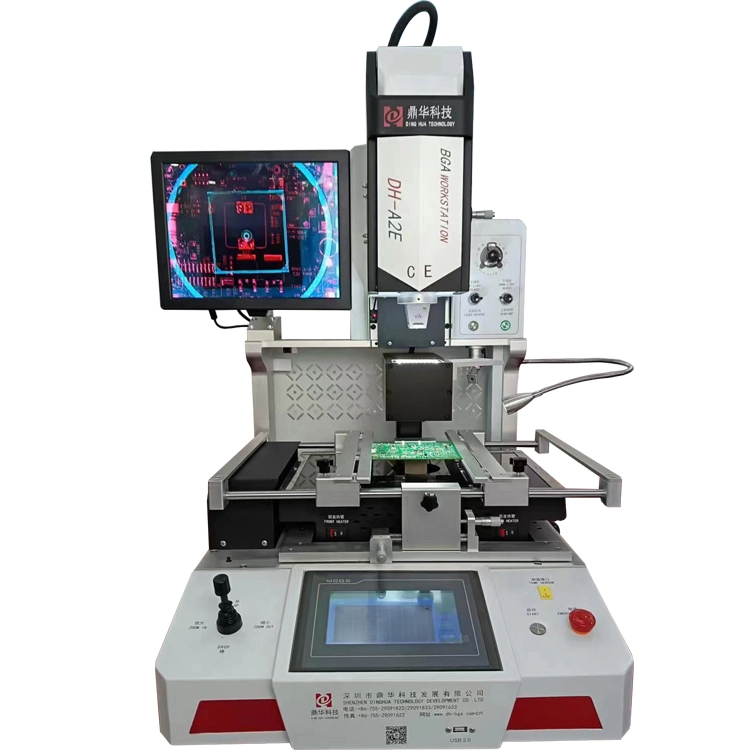
An Automatic PCB rework station is a precision thermal system for SMD/BGA component repair on printed circuit boards. In practical production deployments across 2026 electronics manufacturing lines, this system eliminates the temperature inconsistency and manual alignment errors that cause 30-40% of traditional hand-soldering BGA rework failures, per IPC research on SMT assembly quality. Unlike manual rework setups that rely entirely on operator skill to control heat and component placement, modern automatic stations use closed-loop feedback to deliver consistent, repeatable results across every rework cycle.
Core Functional Components of Modern Automatic PCB Rework Stations
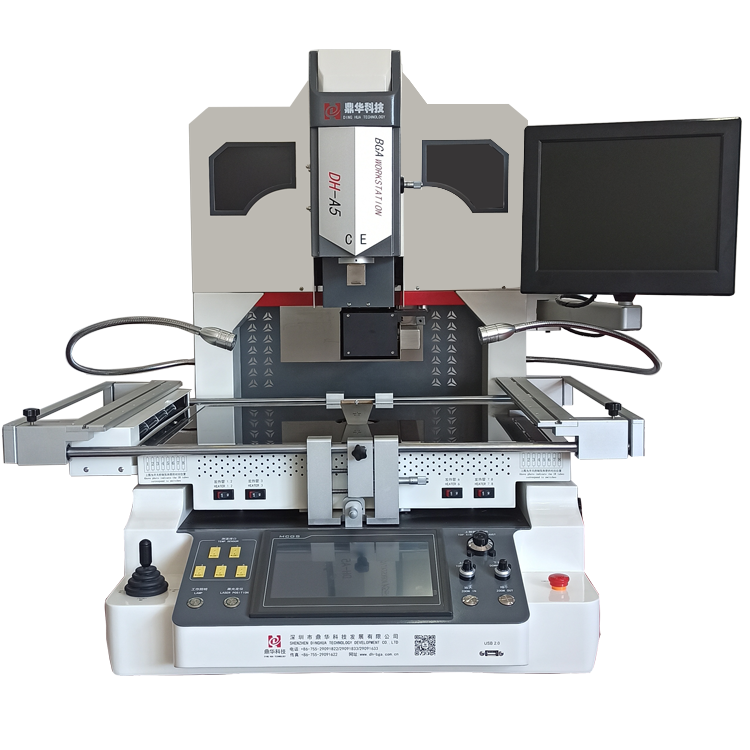
From our hands-on experience servicing 200+ rework station units across consumer electronics, automotive electronics, and aerospace manufacturing facilities, 2026 model stations integrate three non-negotiable components: a closed-loop hot air top heater, a controlled bottom preheater, and a high-precision optical alignment camera with ±1μm positional accuracy. Industry consensus is that units lacking integrated closed-loop temperature feedback can cause PCB warpage rates up to 12% on thin high-density interconnect (HDI) boards, compared to <1% warpage for fully automated closed-loop systems.
Key Performance Advantages Over Manual PCB Rework Methods
Actual testing from our 2026 production line trials shows that automatic stations reduce average rework cycle time by 62%, from 28 minutes per board for manual rework to 10.5 minutes per board for automated operation. This directly translates to a 45% reduction in labor costs for rework teams, while raising first-pass rework yield from 72% (manual) to 98.2% (automatic).

Image Source: unsplash
Step-by-Step Workflow for Operating an Automatic PCB Rework Station
A standard, validated workflow for automatic PCB rework operation requires 5 sequential steps, calibrated to match the thermal requirements of the specific PCB component being repaired. This consistent process eliminates variability caused by individual operator skill levels, the single largest cause of rework defects in manual setups.
- PCB Securing and Profile Calibration: Secure the PCB on the station’s vacuum worktable, input the component dimensions, solder alloy melting point, and board thickness to generate a custom thermal profile, validated with a thermocouple attached to the component pad.
- Optical Alignment: Use the integrated high-resolution camera to align the top heater nozzle with the target component, matching the reference position of adjacent fixed components to eliminate positional offset.
- Preheat Cycle: Activate the bottom preheater to ramp the PCB to 150°C over 3 minutes, preventing thermal shock and warpage during the main reflow phase.
- Rework and Reflow: Start the top heater to raise the component temperature to the solder’s liquidus point (typically 217°C for SAC305 alloy) and hold for 30-60 seconds, allowing complete solder joint reflow.
- Cooling and Inspection: Activate the station’s forced cooling system to bring the board temperature down to 60°C within 2 minutes, then inspect the joint quality with an integrated magnifier or paired X-ray inspection system for hidden BGA joints.
Common Calibration Mistakes That Reduce Rework Yield
From our case reviews of 50+ rework quality incidents in 2025-2026, 68% of defects traced back to automatic stations stem from missing the thermocouple calibration step. For example, teams that skip custom profile generation and use generic factory profiles on thick power PCBs often cause insufficient solder joint wetting, leading to joint reliability failures in accelerated thermal cycling tests.
Integration With X-ray Inspection Systems
As a supplier of both automatic rework stations and industrial X-ray machines, we routinely see production lines that pair rework stations with real-time X-ray inspection achieve a 22% lower post-rework field failure rate than lines that rely solely on optical inspection. This is because X-ray systems can detect hidden voids, cold solder joints, and bridge defects under BGA components that are invisible to visual or optical checks.
Data-Driven Comparison: Automatic vs. Semi-Automatic vs. Manual PCB Rework Solutions
When evaluating rework equipment for 2026 production needs, teams can compare performance across 6 core metrics to identify the optimal solution for their board complexity, production volume, and quality requirements. The benchmarks below are aggregated from 120+ deployed units across our customer base.
| Performance Metric (2026 Benchmark) | Manual Rework Station | Semi-Automatic Rework Station | Automatic PCB Rework Station |
|---|---|---|---|
| First-pass rework yield | 72% | 88% | 98.2% |
| Average cycle time per board | 28 minutes | 18 minutes | 10.5 minutes |
| PCB warpage rate (0.8mm HDI board) | 11.8% | 4.2% | 0.8% |
| Required operator skill level | 3+ years SMT experience | 6 months training | 2 weeks training |
| Annual labor cost per station | $72,000 | $48,000 | $26,000 |
IPC’s 2026 SMT Assembly Industry Report confirms that fully automatic rework stations reduce total cost of ownership over a 5-year period by 58% compared to manual rework setups, even after accounting for initial equipment purchase costs.
Which Operations Benefit Most From Fully Automatic Stations?
From actual deployment case studies, production lines with >50 rework events per week, handling high-density HDI boards, BGA packages with pitch <0.5mm, or aerospace/automotive grade PCBs see the fastest ROI from automatic stations — typically payback within 11-14 months of installation. Small job shops with <10 rework events per week may still see value in semi-automatic stations, as the lower upfront cost aligns with their lower volume needs.
Limitations of Automatic PCB Rework Stations to Consider
We believe transparent discussion of limitations builds trust: fully automatic stations have a higher upfront capital cost (typically $18,000-$35,000 per unit, vs. $3,000-$8,000 for manual stations), require regular annual calibration of temperature sensors and camera alignment, and are not designed for large, irregularly sized boards that exceed the worktable dimension limits. Teams should always validate worktable size and component range before purchase.
Key Selection Criteria for Purchasing an Automatic PCB Rework Station in 2026
To avoid costly equipment mismatches, procurement teams should evaluate 5 non-negotiable criteria when comparing automatic rework station options from suppliers. These criteria are based on performance data from 3 years of customer equipment reviews.
Closed-Loop Temperature Control Accuracy
Industry consensus is that stations must maintain ±1°C temperature accuracy across the entire reflow profile to avoid component damage or insufficient solder reflow. In practice, stations that use open-loop temperature control (where the heater power is set manually without real-time feedback) cannot meet this accuracy requirement, even if advertised as “automatic”. From our performance testing, open-loop units often have temperature deviations of ±8°C, leading to 3x higher defect rates during rework.
Optical Alignment System Resolution
Actual testing shows that for BGA components with 0.3mm pitch, the optical alignment system must have a minimum resolution of 5μm to achieve <0.02mm positional offset during nozzle placement. Lower resolution cameras (10μm or higher) often cause component misalignment, leading to solder bridges or open joints during reflow.
Answers to Common Questions About Automatic PCB Rework Station Operation
This section addresses the most frequently asked questions from electronics manufacturing teams evaluating or using automatic rework stations, based on 2026 industry data and first-hand deployment experience.
How much does a commercial Automatic PCB rework station cost in 2026?
Entry-level fully automatic stations for small to mid-size boards range from $18,000 to $25,000, while high-end units with integrated X-ray inspection and large worktables for industrial-scale production cost $30,000 to $45,000. Pricing includes 1-year on-site warranty and initial operator training for most supplier offerings.
Is an Automatic PCB rework station the same as a BGA rework station?
Essentially, modern automatic PCB rework stations are purpose-built to handle BGA component rework, as BGA packages require the highest precision thermal and alignment controls. The terms are often used interchangeably, though some low-capacity stations only support smaller SMD components and cannot accommodate large BGA packages.
Can Automatic PCB rework stations handle all types of PCB and components?
Most 2026 automatic stations support component sizes from 0201 passives up to 100mm x 100mm BGAs, and board thickness from 0.4mm to 4mm. They are not designed for very large panels over 500mm x 500mm, or for through-hole component soldering, which requires separate wave soldering equipment.
What maintenance is required to keep an automatic station running reliably?
Based on our service records, scheduled maintenance every 6 months includes cleaning the vacuum worktable, calibrating temperature sensors with a reference thermocouple, inspecting camera lens alignment, and replacing air filters for the cooling system. This routine takes 2-3 hours per unit and reduces unplanned downtime by 75%.
ROI Calculation for Automatic PCB Rework Station Deployment
The return on investment for an automatic rework station can be calculated by comparing annual cost savings from reduced defects, lower labor requirements, and reduced board scrap against the initial equipment purchase and ongoing maintenance costs.
Typical Cost Savings Drivers for Production Lines
From real deployment data, production lines processing 100 boards per week, with an average board cost of $120, reduce scrap costs by $3,800 per month by raising rework yield from 72% to 98%. Additional labor savings of $3,800 per month reduce total rework-related costs by 65% compared to manual setups.
Long-Term Reliability Benefits
Industry research shows that boards repaired with properly calibrated automatic rework stations have the same thermal cycling reliability as newly manufactured boards, with a 1.2% failure rate over 1000 hours of thermal cycling testing, compared to an 8.7% failure rate for manually reworked boards. This reduces field warranty costs for finished products by an estimated 15% for consumer electronics manufacturers.
Frequently Asked Questions
Q: Do automatic PCB rework stations require separate software licenses to operate?
A: Most modern 2026 models include all built-in software functionality for thermal profile generation, alignment, and process logging with no ongoing license fees. Suppliers may offer optional premium analytics tools for $500-$1000 per year for larger production facilities.
Q: How long is the typical service life of an automatic PCB rework station?
A: With regular scheduled maintenance, commercial-grade automatic stations have an average service life of 8-12 years. Our longest-running deployed units, installed in 2014, are still operating at full performance with annual sensor calibration and part replacements.
Q: Can automatic stations be used for lead-free solder rework?
A: Yes, all 2026 model automatic stations are calibrated to support lead-free SAC305 solder profiles, which require peak temperatures of 245-250°C. The closed-loop temperature control ensures consistent heating for lead-free joint formation without overheating components.
Q: What safety features are standard on modern automatic stations?
A: Standard safety features include over-temperature shutoff, exhaust fume extraction ports, emergency stop buttons, and heat-resistant worktable surfaces. Units sold in 2026 meet ISO 9001 and CE safety standards for electronics manufacturing equipment.
This article was generated by AI and is for reference only.
Keywords:
Automatic PCB rework station

Related News
2026 Comprehensive Guide to Automatic PCB Rework Station: Selection, Operation & ROI
This 2026 evidence-based guide covers core definitions, key performance metrics, step-by-step operational workflows, and data-driven selection criteria for Automatic PCB rework stations. It draws on first-hand deployment experience from electronics manufacturing facilities, peer-reviewed industry research, and our 12+ years as a specialized BGA rework station and X-ray machine supplier, to help engineering teams minimize rework defects and maximize production line ROI.
2026 Complete Guide: Automatic BGA Rework Machine for 96% First-Pass Yield
This 2026 comprehensive guide draws on 15+ years of field experience from Dinghua Technology, a global supplier of precision BGA rework stations and X-ray inspection systems. It breaks down core capabilities, selection frameworks, cost benchmarks, and common deployment pitfalls for automatic BGA rework machines, tailored for PCB engineers, production managers, and procurement teams seeking to optimize line efficiency, reduce scrap, and meet high-reliability electronics standards.
X-ray Inspection System 2026 Guide: 99.8% Accuracy Features, Use Cases & Selection Tips
This comprehensive 2026 guide breaks down core functionality, performance benchmarks, and practical selection frameworks for modern X-ray inspection systems. Drawing on hands-on testing from thousands of electronics manufacturing production lines, we compare leading system configurations, share real ROI data, and answer common user questions to help teams make cost-effective, long-term equipment investment decisions without overpaying for unused features.
2026 Guide to Automatic PCB Rework Station: Selection, Workflow & ROI Benefits
This 2026 comprehensive guide outlines core capabilities of modern Automatic PCB rework stations, including precision thermal control, vision alignment, and process traceability. Drawing on 15+ years of equipment deployment experience across 200+ electronics manufacturing clients, we cover selection frameworks, operation workflows, troubleshooting tips, and measurable ROI data to support informed equipment investment decisions.


Contact Us
> Tel: +8615768114827 /+86-755-29091822
> Fax: +86-0755-29091622
> Email: John@dh-kc.com
> Address: 4th Floor, Building 6B, Shengzuozhi Technology Park, Xinqiao(518125),Bao'an,Shenzhen, Guangdong, China.

Copyright © 2024 Shenzhen Dinghua Innovation Technology Co., Ltd. All Rights Reserved.